First Week of School Activities: Building Classroom Community Through Structured Connection
The transition from summer break to the academic year is a critical period for educators. It sets the tone for classroom culture, establishes behavioral expectations, and initiates the social dynamics that will define student interactions for months. For teachers, particularly those in kindergarten, first grade, and early elementary settings, this window is not just about curriculum delivery; it is about infrastructure building. The most effective way to build this infrastructure is through intentional first week of school activities that prioritize social-emotional learning (SEL) alongside logistical orientation.
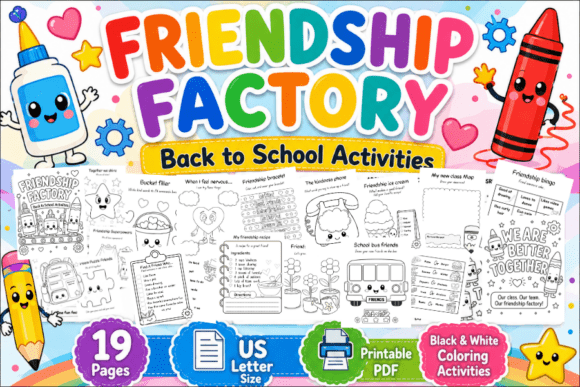
One resource designed specifically to streamline this process is the Friendship Factory Back to School Activities Pack. This printable resource addresses a common pain point in early education planning: the need for engaging, low-prep materials that simultaneously foster community and teach specific friendship skills. By integrating structured creative tasks with social interaction, educators can reduce the stress of the initial weeks while ensuring students feel seen, connected, and ready to learn.
The Strategic Value of SEL in Early Education
Social-Emotional Learning is no longer an optional add-on; it is a foundational component of academic success. Research consistently shows that students who possess strong interpersonal skills demonstrate higher levels of engagement and lower levels of anxiety. During the first week of school, when routines are fluid and expectations are being negotiated, SEL activities serve as a stabilizing force.
The Friendship Factory pack leverages this principle by embedding SEL objectives into fun, accessible formats. Rather than relying solely on verbal instructions or abstract discussions about "being nice," these worksheets provide tangible outlets for expression. When a student colors a "School Bus Friends" page or writes a "Friendship Recipe," they are practicing empathy, self-awareness, and relationship skills in a low-stakes environment. This approach allows educators to observe student personalities and social cues without the pressure of formal assessment.
Workflow Integration: Preparing for Day One
For educators managing large class sizes or limited prep time, the efficiency of instructional materials is paramount. The Friendship Factory pack is designed with practicality in mind, offering 19 black-and-white activities that require minimal preparation. Here is how this resource fits into a typical teacher’s workflow:
- Pre-Planning Phase: Before the first day, teachers can print copies of the core activities. Because the designs are black-and-white, they are cost-effective and printer-friendly. Educators can organize these packets by activity type—such as writing prompts, coloring pages, or games—to create distinct centers or morning work stations.
- Implementation Phase: On the first few days, these materials can be deployed during transitions, independent work time, or as part of a "meet the teacher" routine. For example, the "About Me Friendship Phone Craft" serves as both a decorative classroom display and a personalized icebreaker, allowing students to share facts about themselves while creating a keepsake.
- Follow-Up Phase: Completed worksheets can be used to inform future grouping strategies. By reviewing a student’s "Friendship Superpowers" entry, a teacher might identify a child who values teamwork or creativity, enabling more strategic peer pairing for collaborative projects later in the year.
Key Components of the Friendship Factory Pack
The versatility of this resource lies in its variety. It does not rely on a single mode of engagement but rather cycles through different types of cognitive and motor tasks. Understanding the specific components helps educators plan a balanced schedule for the first week.
Writing and Reflection Activities
Activities like the Friendship Recipe Writing Activity and the Friendship Bracelet Writing Page encourage students to articulate what makes a good friend. These prompts go beyond simple sentences, inviting students to think metaphorically and creatively. For early writers, these templates provide structure, reducing the intimidation factor of starting a blank page. For advanced learners, they offer space for deeper reflection on social nuances.
Creative and Tactile Engagement
Not all students express themselves best through text. The pack includes hands-on elements such as the Friendship Ice Cream Craftivity and the About Me Friendship Phone Craft. These activities allow kinesthetic learners to engage with the material physically. Assembling a craft requires fine motor skills and patience, providing a calming focus during the chaotic first days of school. Furthermore, these crafts often double as classroom decor, visually reinforcing the theme of friendship and community throughout the room.
Interactive Games and Movement
Static worksheets can become monotonous if overused. The inclusion of interactive elements like the Friendship Bingo Game, Would You Rather Friendship Game, and Roll Share Friendship Game breaks up the routine. These games promote movement and verbal interaction, helping to burn off excess energy while teaching students how to take turns, listen actively, and respect differing opinions. The Puzzle Piece activity, likely involving matching or assembling, further emphasizes the concept that every student has a unique role in the classroom community.
Best Practices for Implementation
To maximize the effectiveness of these first week of school friendship lessons, educators should consider several implementation factors:
- Modeling Behavior: Teachers should participate in the activities alongside students. When an educator shares their own "Friendship Recipe" or plays "Would You Rather," it models vulnerability and openness. This behavior signals to students that it is safe to share personal thoughts and make mistakes.
- Differentiation: While the pack is designed for kindergarten and first grade, the complexity can be adjusted. For younger students, the focus may be on coloring and simple sentence completion. For older students in second or third grade, teachers can expand on the prompts, asking for more detailed explanations or peer feedback sessions.
- Integration with Morning Work: These sheets are ideal for morning work because they are self-contained. Students can begin them independently upon arrival, allowing the teacher to handle administrative tasks or greet families at the door. This reduces downtime and prevents behavioral issues before the day officially starts.
- Early Finisher Management: Having a bank of meaningful activities is crucial for managing diverse pacing. If a student finishes their math worksheet quickly, they can move to a friendship-themed coloring page or a bingo game. This ensures that early finishers remain engaged in positive, community-building behaviors rather than disrupting peers.
Long-Term Benefits for Classroom Culture
The impact of well-executed back to school activities extends far beyond the first five days. A classroom community built on mutual respect and understanding during the initial weeks tends to experience fewer conflicts and higher levels of cooperation throughout the year. When students have already practiced sharing, collaborating, and identifying each other's strengths through activities like the Friendship Superpowers exercise, they are better equipped to handle disagreements constructively.
Additionally, these resources support inclusivity. By focusing on friendship and shared experiences, educators create a welcoming environment where every student feels valued regardless of their background or ability level. The visual nature of many of these printables also supports English Language Learners (ELLs), who can engage with the content through images and simple language even if their reading proficiency is still developing.
Conclusion
Preparing for the start of the school year involves balancing logistical needs with emotional ones. The Friendship Factory Back to School Activities Pack offers a comprehensive solution that addresses both. By providing a mix of writing, crafting, and gaming options, it allows educators to create a dynamic, engaging, and supportive classroom environment from day one. For professionals seeking to enhance their SEL curriculum with ready-to-use, high-quality materials, this pack represents a practical investment in long-term classroom success. Integrating these social emotional learning worksheets into your first-week planning ensures that the foundation of your classroom is not just academically rigorous, but also socially resilient.